Railenko
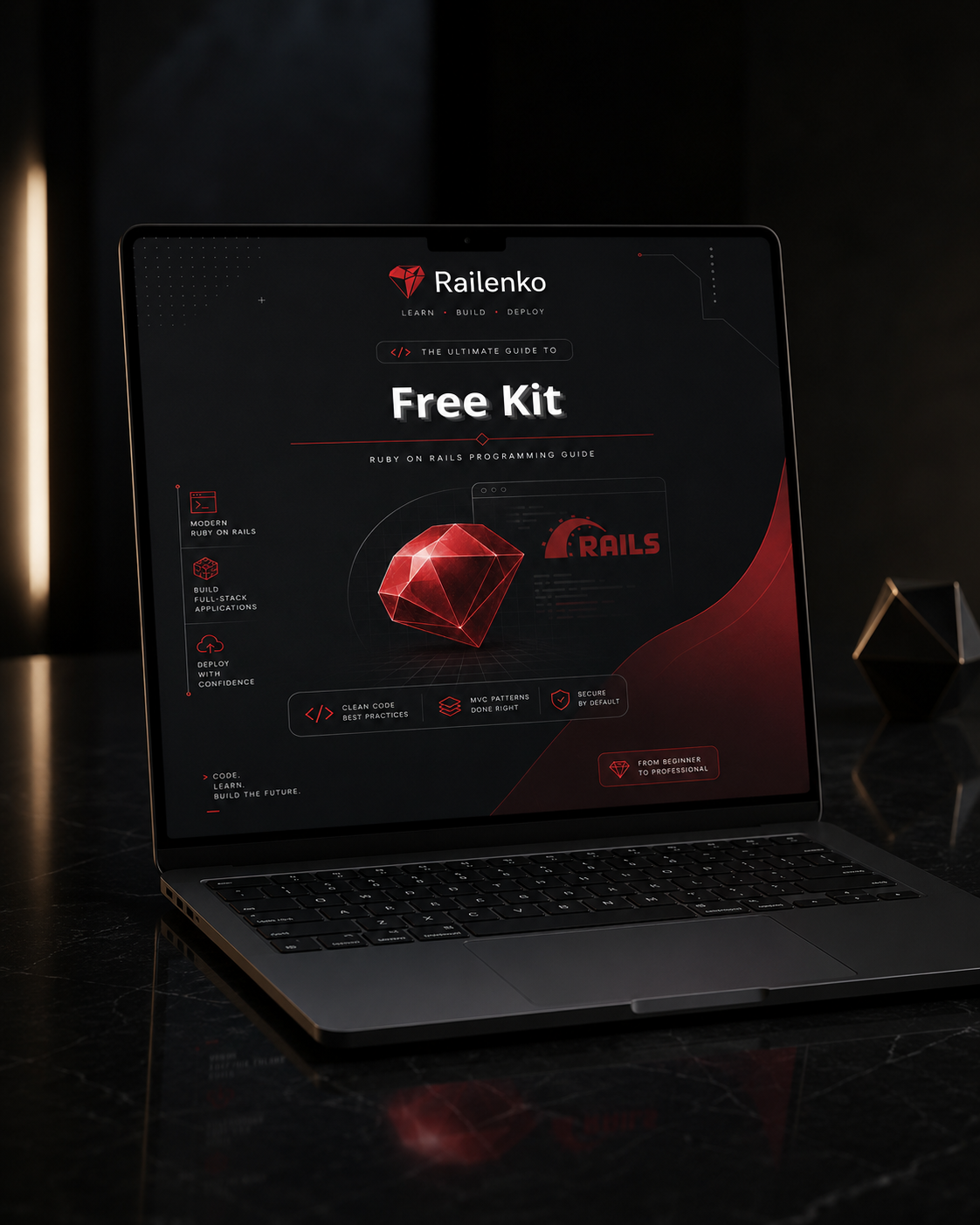
Free Kit
Free Kit
Couldn't load pickup availability
- 📁 Digital file available after purchase
- ♾️ Long-term availability
- 🔒 Secure checkout
- 🗓️ Content updated in 2026
Self-paced learning overview
1. Problem Statement
Many people begin learning programming with scattered materials, unclear terms, and examples that feel disconnected from real work. Ruby in Rail programming can look confusing when syntax, project folders, routes, data, and page logic appear at the same time. New learners often need a guided starting point that explains not only what to write, but also why each part exists. Without structure, it becomes difficult to understand how small code pieces connect inside a full learning project. Free Kit was created to reduce that confusion through organized topics, careful explanations, and practical examples.
2. Solution
Free Kit gives learners a structured entry into Ruby in Rail programming through simple modules and focused practice tasks. The course introduces the language, project logic, naming patterns, file organization, and the basic flow of a web page. Instead of rushing through many topics, it separates ideas into small learning sections that can be reviewed at a steady pace. Each section connects theory with an example so learners can see how code behaves in context. The goal is to help students build a clear foundation before moving into larger Railenko tariffs.
3. What’s Inside
Free Kit includes a carefully arranged set of learning materials for the beginning stage of Ruby in Rail programming. The course starts with an introduction to Ruby syntax, including variables, strings, numbers, arrays, hashes, methods, conditions, and loops. These topics are explained through short code examples that show how data is written, changed, checked, and displayed.
The next part introduces the idea of a structured web project. Learners review how folders, files, naming patterns, and code sections work together. This part does not overload the learner with advanced architecture. Instead, it explains the purpose of each common area in a beginner-friendly project and shows how one part of the code can connect with another.
Free Kit also includes introductory materials about routes, controllers, views, and simple data flow. Learners see how a request can move through a project, how a page can be prepared, and how content can be displayed. The explanations are written in a direct style so the learner can connect each term with a practical role.
A separate section is focused on reading code. This is important because many learners try to write code before they feel comfortable understanding code that already exists. Free Kit includes examples where learners are asked to look at a small piece of code, identify the parts, and describe what happens line by line.
Practice tasks are included throughout the course. These tasks may ask learners to create small methods, adjust page text, organize a sample file, write simple conditions, or describe how data moves in a small example. The tasks are designed to support learning through repetition and careful observation.
The course also includes short review sections. These reviews help learners revisit key ideas before moving to the next topic. Each review uses plain wording and practical prompts so learners can check whether they understand the material well enough to continue.
Free Kit is not built around loud claims or unrealistic outcomes. It is a structured starting point for people who want to begin Ruby in Rail programming with a steady rhythm and practical direction.
4. Who Is This For?
Free Kit is for learners who are new to Ruby in Rail programming or who have only seen small pieces of code before. It is also suitable for people who tried learning from mixed materials and now want a more organized route.
This tariff fits learners who prefer clear explanations, practical examples, and a calm study pace. It is useful for those who want to understand the role of code inside a web project before moving into deeper topics.
Free Kit can also support learners who already know a little Ruby but want to review the basics in a more structured way. The course gives them a chance to revisit syntax, project flow, and simple code organization before choosing a larger Railenko tariff.
5. What You’ll Learn
- How Ruby syntax works in basic examples
- How variables, strings, arrays, hashes, and methods are used
- How conditions and loops support simple logic
- How a web project can be arranged into folders and files
- How routes, controllers, and views connect in a learning project
- How to read short code examples line by line
- How to write small practice tasks with clear purpose
- How data can move through a simple project example
- How naming patterns make code easier to follow
- How to review your own learning notes and code samples
- How to prepare for more detailed Railenko course collections
6. Refund Note
Railenko includes a 30-day refund window for this tariff. If the course materials do not match your learning needs, you may submit a refund request within 30 days of purchase according to the store policy.
Do I need previous coding knowledge?
Do I need previous coding knowledge?
Some tariffs are designed for early learners, while others go deeper into project structure, logic, and code organization. Each tariff description explains who it is made for.
What is included in each Railenko tariff?
What is included in each Railenko tariff?
Each tariff includes learning materials built around Ruby in Rail programming, with written modules, code examples, practice tasks, and structured explanations.
Share