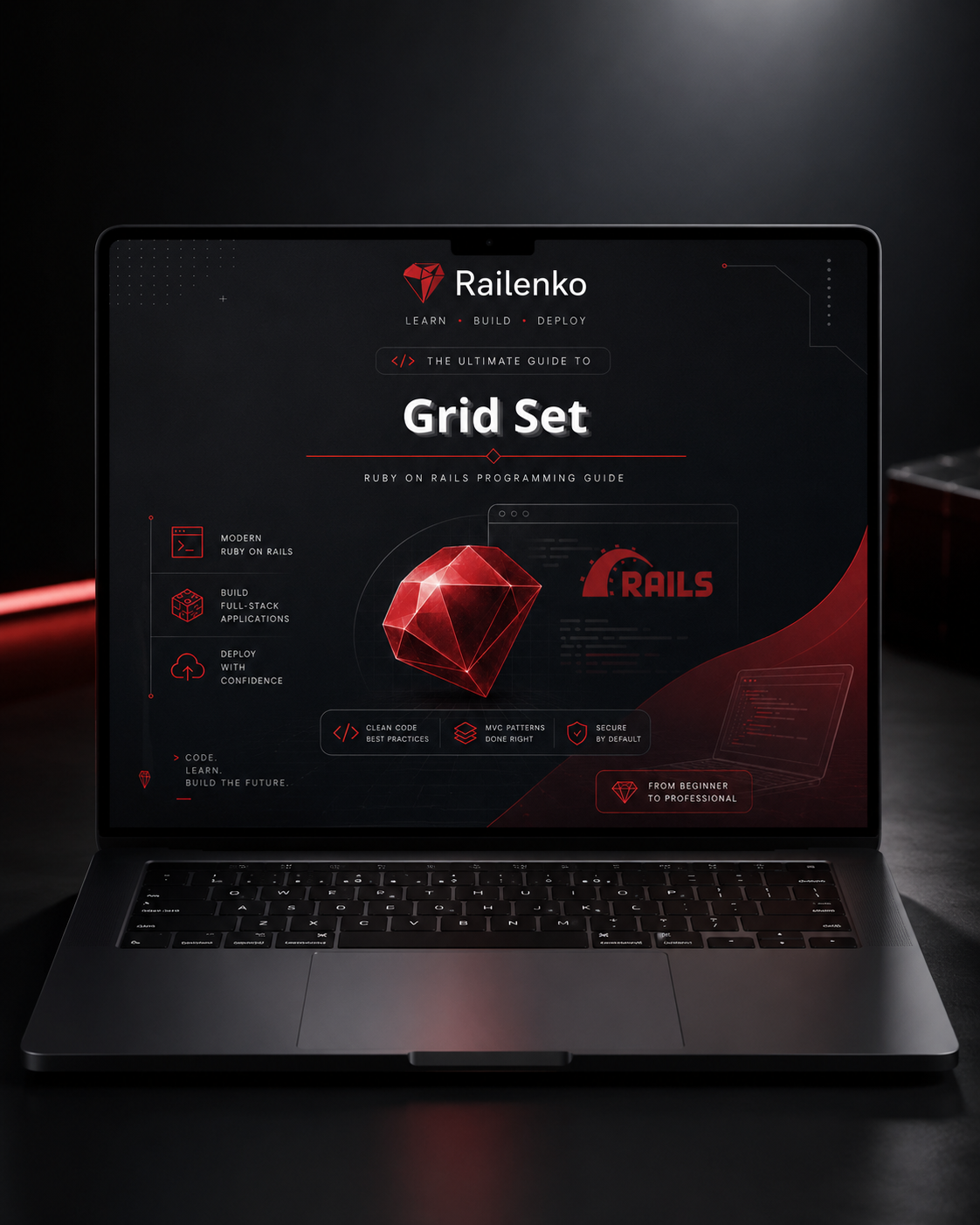
Railenko
Grid Set
Grid Set
Couldn't load pickup availability
- 📁 Digital file available after purchase
- ♾️ Long-term availability
- 🔒 Secure checkout
- 🗓️ Content updated in 2026
Self-paced learning overview
1. Problem Statement
After learners understand the first project folders and basic code flow, a new challenge often appears: how to connect separate parts into a working structure. A learner may understand routes, views, and controller actions separately, yet still feel unsure about how they should interact in one complete learning example. Data can move through several project areas, and without a visible pattern, that movement may feel confusing. Many beginners also repeat code because they do not yet know how to separate logic into smaller reusable parts. Grid Set was created for learners who need a more organized way to see how project pieces line up and support one another.
2. Solution
Grid Set introduces a structured approach to reading and building small project sections in Ruby in Rail programming. The course uses a grid-like learning method: each topic is placed beside related concepts so learners can compare roles, patterns, and code behavior. Instead of treating each file as an isolated item, the materials show how routes, controller actions, views, helpers, and data examples can work together. Learners study practical examples where one change in the project affects another part. This approach helps students develop a more connected view of project logic and prepare for larger course collections.
3. What’s Inside
Grid Set includes learning materials built around project connection, data organization, and reusable code thinking. The course begins with a short review of the project flow introduced in earlier Railenko tariffs. Learners revisit the route, controller, and view relationship, but this time the focus is placed on how these parts cooperate inside a slightly larger learning example.
The first main section explains how data moves across project areas. Learners study examples where a value begins in one part of the project, is prepared in another, and appears on a page. This includes simple text data, lists, grouped information, and small collections used for practice. The goal is not to overload the learner with advanced theory, but to make the path of information more visible.
The next section focuses on page structure. Learners examine how a page can be divided into sections, how repeated page blocks can be organized, and how naming helps each section remain readable. This part is useful for understanding how a web page can be built from smaller pieces rather than one large block. The course explains how headings, lists, labels, and dynamic values can be arranged inside a learning view.
Grid Set also introduces reusable code parts. Learners explore why repeating the same logic again and again can make a project harder to read. The course explains how small methods, helper-style thinking, and separated page sections can make learning examples cleaner. The material stays practical: each idea is shown through a small sample before the learner is asked to adjust or explain it.
Another important part of Grid Set is the comparison table method. Learners are shown two or more versions of a small project section and asked to compare them. One version may contain repeated code, unclear names, or mixed responsibilities. Another version may be more organized, with better separation between data, logic, and display. This helps learners understand not just what code does, but how code choices affect readability.
The course includes practice tasks where learners build small connected features. These may include preparing a list, displaying grouped items, creating a basic page section, adjusting a route, writing a small method, or connecting prepared data to a view. Every task is focused on one skill, but it also shows how that skill fits into the wider project.
Grid Set contains written explanations, code samples, task prompts, review notes, and project-reading exercises. The written explanations describe the purpose of each concept. Code samples show practical use. Task prompts invite the learner to adjust or create small parts. Review notes help the learner pause and restate the idea in their own words. Project-reading exercises train the learner to follow code movement across files.
A dedicated section is included for common beginner mistakes. This section looks at unclear variable names, repeated code blocks, page sections that do too much, and data that appears without context. Instead of presenting these mistakes as failure points, the course treats them as normal learning moments. Each example is rewritten in a calmer and more organized way.
Grid Set also includes a small practice map for reviewing the course. This map groups topics into project flow, data flow, page sections, naming, reusable code parts, and review tasks. Learners can use it to see which topics they have already studied and which areas need more attention.
By the end of Grid Set, learners should have a more connected understanding of how Ruby in Rail programming projects can be arranged. The course does not make broad claims about outcomes. It provides structured materials for learners who want to improve their project-reading habits and practice building organized code sections.
4. Who Is This For?
Grid Set is for learners who already understand the basics of Ruby syntax and have some familiarity with routes, controllers, and views. It is made for students who want to move beyond isolated examples and study how project pieces connect.
This tariff is suitable for learners who feel that they can read small snippets but still need help understanding a full learning section. It is also useful for those who notice that their code becomes repetitive or difficult to follow when they try to add more than one page element.
Grid Set can support learners who prefer structured comparisons, practical exercises, and visual organization of ideas through written materials. It is a good fit for those who want to study data flow, page sections, and reusable code thinking before moving into deeper course collections.
5. What You’ll Learn
- How routes, controller actions, and views connect inside a learning project
- How data can move from preparation to display
- How to organize simple lists and grouped information
- How to divide a page into readable sections
- How naming patterns support project orientation
- How repeated code can be reorganized into smaller parts
- How to compare different versions of the same code section
- How to identify mixed responsibilities inside a project file
- How to create small methods for practical learning examples
- How to connect prepared data with page output
- How to read project examples across several files
- How to review common beginner mistakes with a structured approach
- How to prepare for more detailed work with modules and collections in Railenko
6. Refund Note
Railenko includes a 30-day refund window for Grid Set. If the course materials do not match your learning needs, you may submit a refund request within 30 days of purchase according to the store policy.
Do I need previous coding knowledge?
Do I need previous coding knowledge?
Some tariffs are designed for early learners, while others go deeper into project structure, logic, and code organization. Each tariff description explains who it is made for.
What is included in each Railenko tariff?
What is included in each Railenko tariff?
Each tariff includes learning materials built around Ruby in Rail programming, with written modules, code examples, practice tasks, and structured explanations.
Share