Railenko
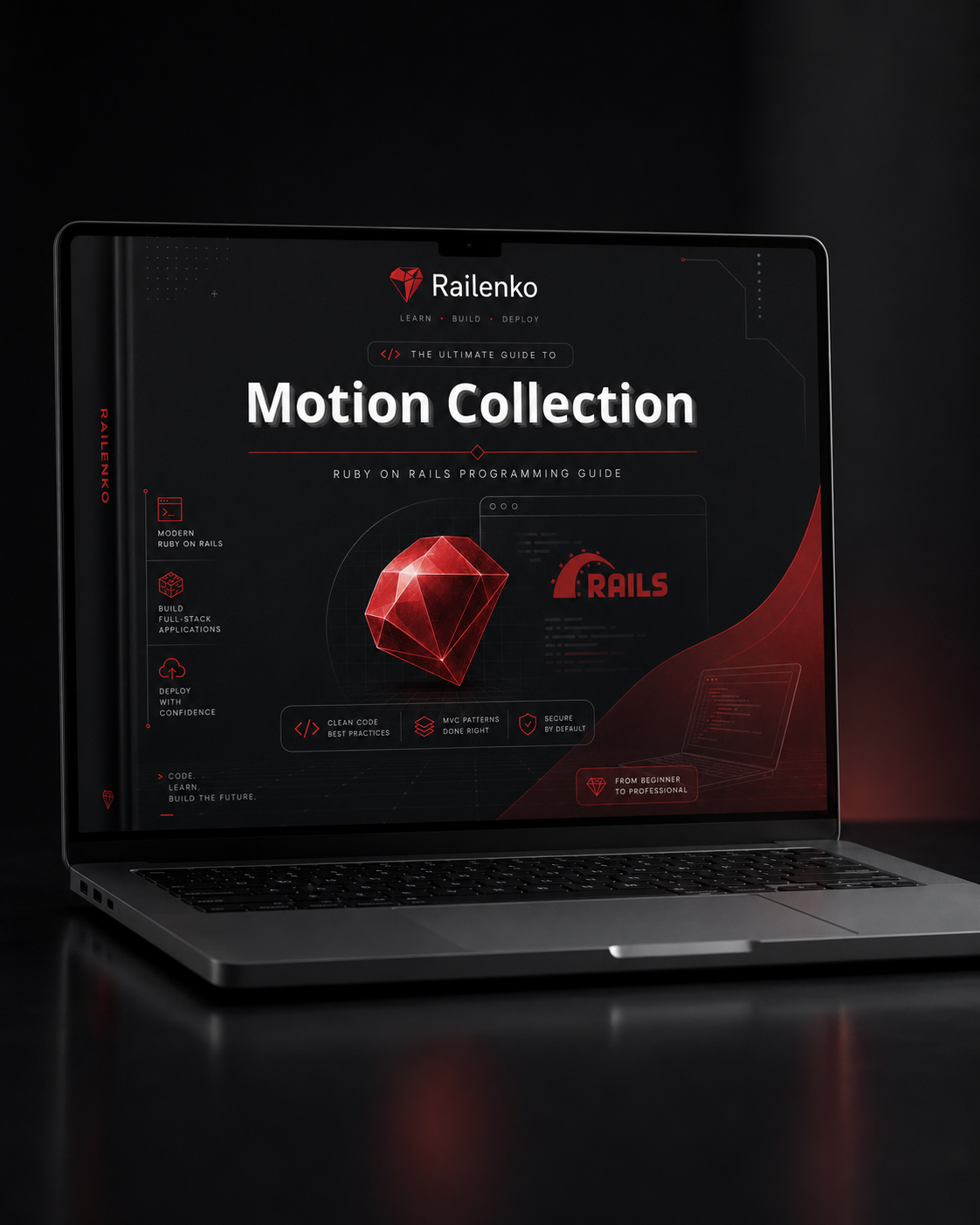
Motion Collection
Motion Collection
Couldn't load pickup availability
- 📁 Digital file available after purchase
- ♾️ Long-term availability
- 🔒 Secure checkout
- 🗓️ Content updated in 2026
Self-paced learning overview
1. Problem Statement
At this stage, learners may understand many Ruby in Rail programming topics, yet still need practice seeing how a project moves from one step to another. A learning example can contain routes, actions, methods, prepared values, page sections, grouped data, repeated structures, and review notes. When these parts appear together, the challenge is not only to understand each part, but also to follow the motion between them. Learners may lose orientation when a small change in one area affects another file or page section. Motion Collection was created for learners who want to study code as a sequence of connected actions rather than separate technical pieces.
2. Solution
Motion Collection organizes Ruby in Rail programming practice around movement inside a project. The course shows how a request begins, how it travels through routes and actions, how data is prepared, how page sections receive information, and how review notes help clarify the structure. Each module follows a visible path, so learners can study project behavior in order. The materials use practical examples, written explanations, tracing tasks, and review prompts. This gives learners a structured way to follow project motion without relying on exaggerated claims or pressure-based wording.
3. What’s Inside
Motion Collection includes learning materials focused on project movement, task sequence, and connected practice. The course begins with a motion map that shows the main path of a Ruby in Rail programming learning project. This map connects the starting request, route, controller action, prepared value, view section, repeated pattern, and review point. Learners use the map throughout the course to see where they are in the project and what step comes next.
The first main section focuses on request flow. Learners study how a page request can begin and how it moves toward the correct route. The course explains how routes guide the project and how route names can support orientation. Learners review examples where one route leads to one action, then compare them with examples where several related routes belong to the same learning area. The goal is to make the first movement of the project visible and readable.
The second section focuses on action flow. Learners study controller actions as movement points inside the project. Each action receives the direction from the route and prepares information for a page. The course explains how an action can stay focused on one clear purpose, such as preparing a title, building a list, grouping data, or choosing a small content block. Learners practice reading actions and describing what each action sends forward.
The next section is about data motion. Learners trace values as they move through the learning project. This includes single values, arrays, hashes, grouped lists, and small prepared collections. The course shows where data begins, how it is named, how it is shaped, and where it appears later. Learners complete tracing tasks where they follow one value from preparation to page output.
A separate part of Motion Collection focuses on page section movement. Learners study how prepared information arrives in a view and becomes part of a visible page section. This includes headings, labels, repeated blocks, list items, small cards, and grouped content areas. The course explains how a page can receive information from project logic while still keeping its structure readable. Learners compare crowded page sections with versions that separate ideas into clearer blocks.
Motion Collection also includes a module on repeated motion patterns. Many project examples use the same kind of movement several times: prepare data, pass it forward, display it, then review the result. Learners study these repeated patterns in different contexts. One example may use a simple text value, another may use a list, and another may use grouped data. The course helps learners recognize the shared path behind different examples.
Another important section focuses on task sequence. Learners are given practical tasks that must be completed in order. A task may begin with reading a route, continue with checking a controller action, move into tracing a value, then finish with reviewing a page section. This sequence-based approach helps learners understand that project work often follows a path. It also prevents the study process from becoming scattered.
The course includes comparison exercises. Learners study two versions of a moving project example. One version may have unclear names, repeated logic, or a page section that mixes several ideas. Another version may show a calmer arrangement with separated parts and clearer naming. Learners describe what changed and how the motion through the project became easier to follow.
Motion Collection includes review prompts after each module. These prompts ask learners to answer practical questions: Where did the movement begin? Which route carried the request? What did the action prepare? Where did the value appear? Which page section received the information? What could be reviewed for better readability? These questions help learners build a habit of following the project path with attention.
A dedicated section is included for movement notes. Learners are encouraged to keep short written notes about each step of the project. A note may describe the route, the prepared value, the page section, or the repeated pattern. These notes help learners return to the project later and understand what each part was doing.
Motion Collection also includes careful adjustment tasks. Learners look at code that already works as a learning example, then make small edits to improve readability. These edits may include changing a name, separating a page block, adjusting a list, or moving repeated content into a smaller part. The course explains each edit through the idea of motion: the project should be easier to follow from one step to the next.
The course also contains a practical review section about common motion breaks. These are moments where the project path becomes harder to read. Examples include a value that appears without context, a route name that gives little information, an action that prepares too many things, or a page section that mixes display with too much logic. Each example is reviewed and rewritten with a calmer structure.
By the end of Motion Collection, learners should have detailed practice following Ruby in Rail programming examples from one step to another. The course does not claim personal outcomes or guaranteed results. It provides organized materials for learners who want to study project movement, trace code paths, and review connected examples with a structured method.
4. Who Is This For?
Motion Collection is for learners who have already studied several Ruby in Rail programming topics and want to understand how those topics move together across a project. It is suitable for students who can read routes, actions, values, and views, but want deeper practice following the full path between them.
This tariff is useful for learners who prefer sequence-based study. If a student wants to understand what happens first, what follows, and how one code area affects another, Motion Collection offers practical materials for that kind of learning.
Motion Collection can also support learners preparing for the final Railenko tariff. It gives attention to project motion, review habits, naming, data tracing, page structure, and careful code adjustment.
5. What You’ll Learn
- How to follow project movement from request to page output
- How routes guide the first step of a learning project
- How controller actions prepare values for page sections
- How to trace single values, lists, hashes, and grouped data
- How prepared information appears inside views
- How to divide page output into readable sections
- How to recognize repeated movement patterns
- How to complete task sequences in a steady order
- How to compare two versions of a project flow
- How to identify unclear names that interrupt project reading
- How to review actions that prepare too many ideas at once
- How to write short notes about code movement
- How to make small readability adjustments with clear purpose
- How to prepare for Lattice Collection through connected project practice
6. Refund Note
Railenko includes a 30-day refund window for Motion Collection. If the course materials do not match your learning needs, you may submit a refund request within 30 days of purchase according to the store policy.
Do I need previous coding knowledge?
Do I need previous coding knowledge?
Some tariffs are designed for early learners, while others go deeper into project structure, logic, and code organization. Each tariff description explains who it is made for.
What is included in each Railenko tariff?
What is included in each Railenko tariff?
Each tariff includes learning materials built around Ruby in Rail programming, with written modules, code examples, practice tasks, and structured explanations.
Share